
Steering the Ship of U.S.-China Relations: A Weekend of Scholarly Insights in Nanjing
The Hopkins-Nanjing Center and the Jiangsu International Cultural Exchange Center warmly welcomed NYU Shanghai members for a weekend of dialogue on the evolving environment of the U.S.-China relations.
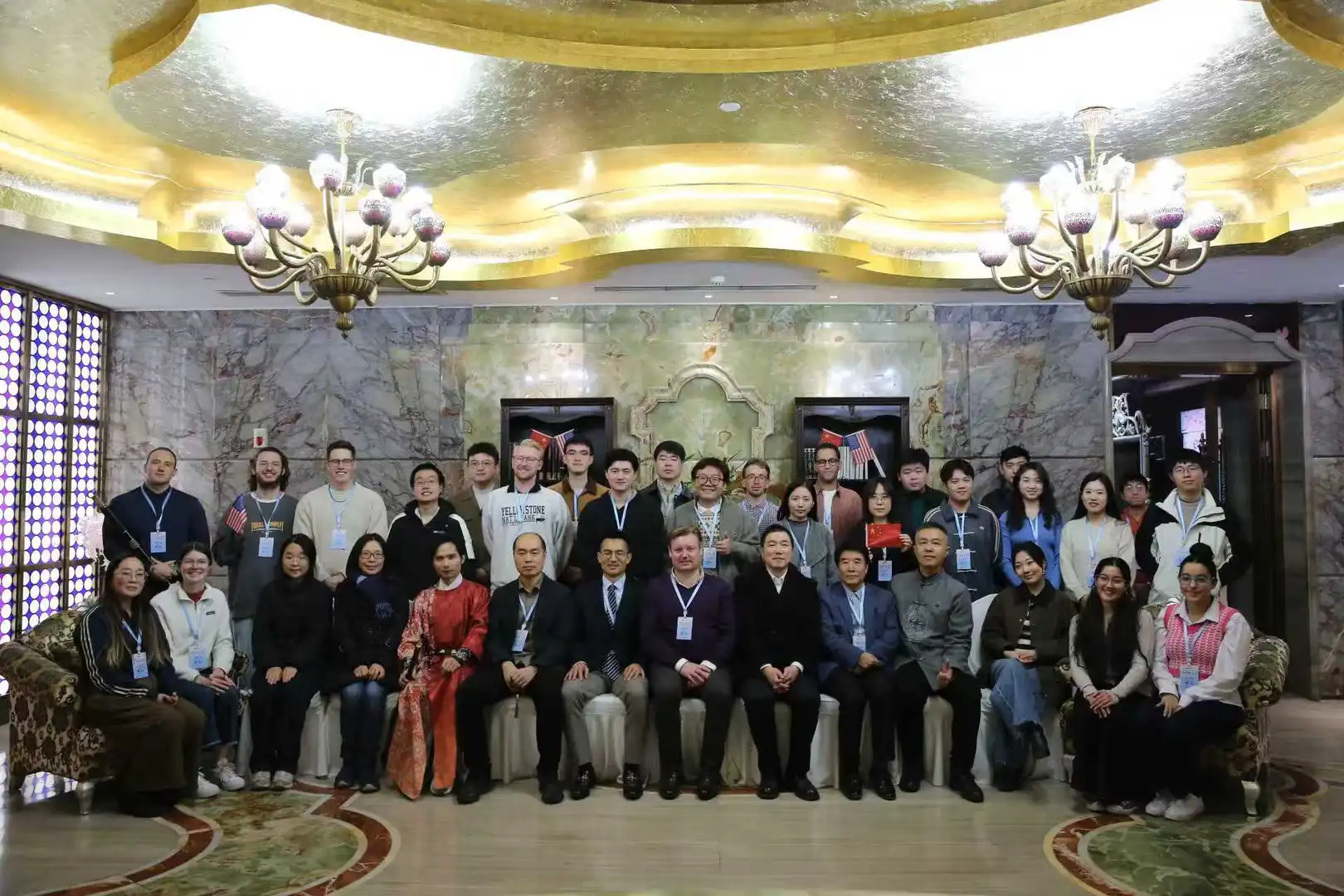
Photo by Jiangsu International Cultural Exchange Center
Professor Ivan Rasmussen and a group of NYU Shanghai students were welcomed by yellow trees and orange leaves on a sunny December morning. Nanjing warmly received the group for an eventful weekend of scholarly dialogue. Hopkins-Nanjing Center hosted the “The Belt and Road at Ten+ Years Old Now ‘Small but Beautiful’: An Empirical Analysis of the BRI, International Institutions, and U.S.-China Strategic Rivalry.” On a similar note, the Jiangsu International Cultural Exchange Center and Beijing Haohan Think Tank hosted the “China-US Youth Salon.” These events aimed to enhance the common understanding of today’s global order and inspire youth dialogue about the relations between China and the United States.
During the event at the Hopkins-Nanjing Center, Professor Rasmussen shared his insights about the perception of a “New Cold War/Cold War 2.0.” He argued that the perception of a New Cold War does not necessarily match reality. Based on quantitative analysis, Professor Rasmussen showed that since the Belt Road Initiative (BRI) was founded, the support to BRI from United States allies has decreased.
Students visited Dr. Sun Yat-sen’s Mausoleum, founder of the Republic of China and its first political party. At the site, many conversations evolved around the nature of Chinese politics and the implications it has in today’s global order. Students also attended “China-U.S. Youth Salon: Steering the Ship of U.S.-China Relations Toward a Smooth Voyage into the Future.” This event had the theme of “Looking to the future, let the big ship of China-U.S. relations move forward smoothly,” in which there were many conversations regarding youth perspectives, humanistic temperatures and landing paths. Professor Rasmussen shared his insights about the historical node of the 80th anniversary of the end of World War II, reflecting on the history of cherished peace we averted since World War II. Similarly, Chen Shu, deputy secretary-general of Jiangsu International Center for Cultural Exchanges emphasized that these spaces that bring together students from U.S. universities in China are crucial "to promote understanding and friendship among young people in the China-U.S. relations. This big ship injects the strongest and most durable power.”
Students left the weekend with fresh perspectives about the China-U.S. relationship, which is a geopolitical complexity that is now moving from a strategic competition to a strategic rivalry. Clara Yuasa, a Brazilian student taking Professor Rasmussen's U.S.-China Relations course at NYU Shanghai said that this opportunity “was very eye opening in terms of belonging.”
“As someone from South America, being part of conversations of two nations shaping the world today, made me realize the impact of the Global South and developing nations. I believe there should be more representation in those conversations, as we are resource and labor centers for the world but have yet to be invited to join conversations at an official capacity.”
Clara represents many students at NYU Shanghai, who are looking forward to making the most out of the learning opportunities that China has to offer.

Photo by Mattis Nurit